Louisville's Peer Metros in Housing Stability: Population
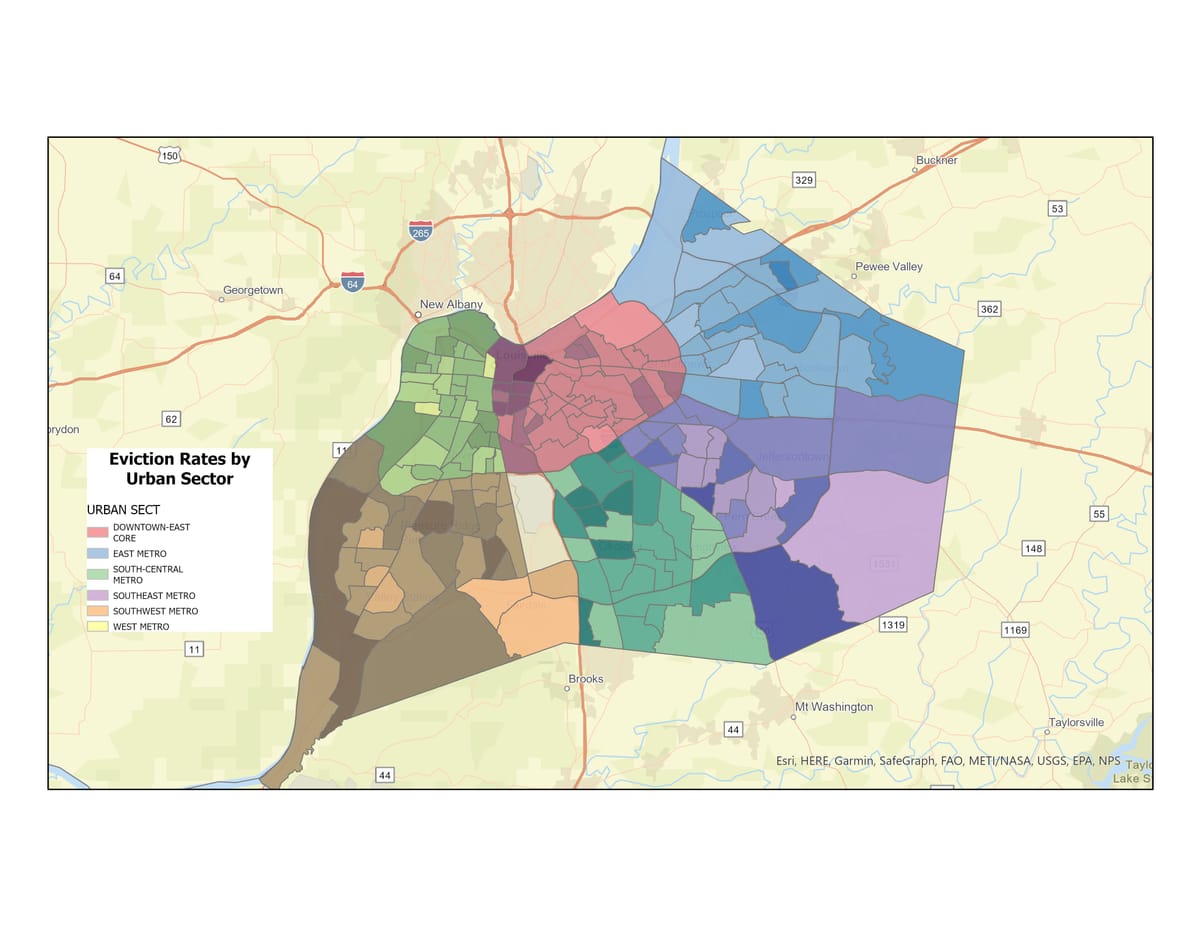
Louisville is not only my hometown, it is my college city, and the metro in which I have conducted published research. One of the questions that continues to circulate around Louisville and other metros is: Which metro areas are our true peers? We decided to take on this challenge of finding Louisville Metro's true peers and to do the same for Atlanta. The focus on finding peer cities/metros is usually to measure where you are as a metropolis in comparison with others. So, why not benchmark where things stand with respect to housing stability, a matter of critical importance?
The first metric we used to determine peer-ness between metros is Total MSA Population (Metropolitan Statistical Area). This metric is one of the five measures we used to determine which metros were closest in proximity to Louisville, across all measures. In the graph below, we see that the metro that had a population figure closest to Louisville was actually the second-closest metro when it was all said and done.
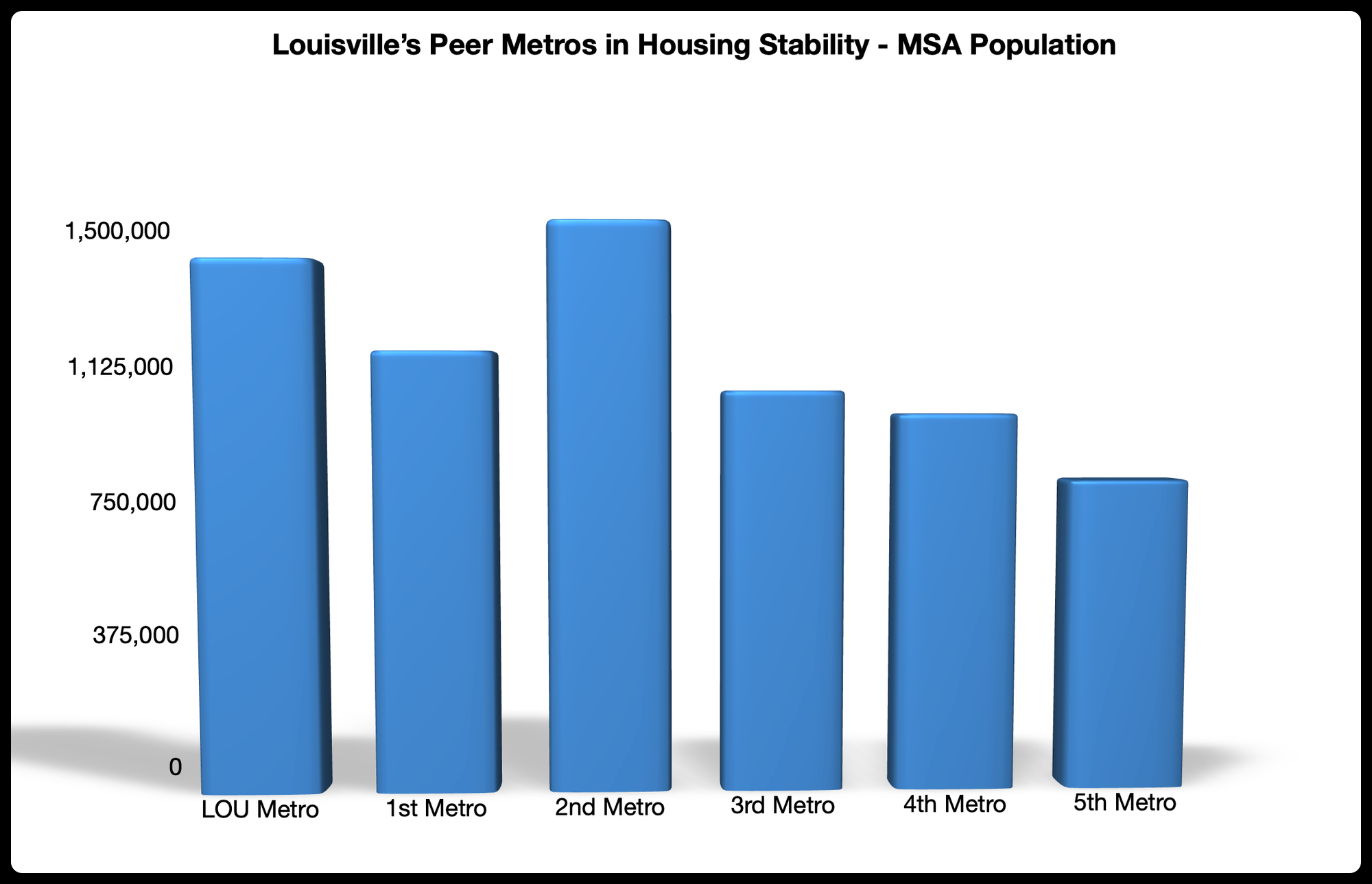
Each of the five metrics used to identify Louisville's peer metros were weighted equally. MSA Population is critical to the housing stability equation to ensure that we are accounting for similar complexities in governance and meeting basic human needs like housing.
We look forward to sharing more in the near future. Background information and additional details will be shared on the basis of interest and subscriptions.